
Trail Specifications
- Length : 6.1 km
- Average Duration : 4-4.5 hours
- Overall Difficulty (1-5) : 3
- People Interaction : Low
- Biodiversity : High
- Cultural : High
- Wind influence : Low
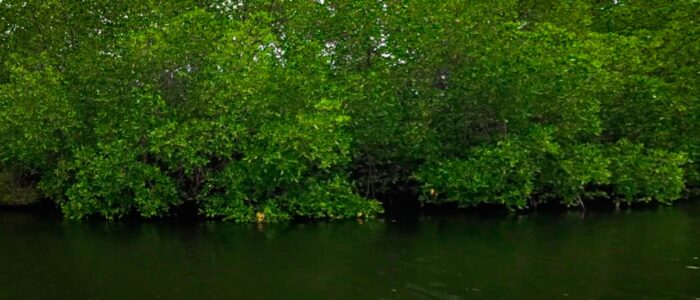
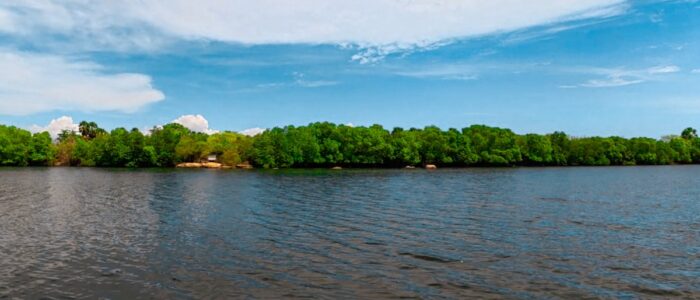
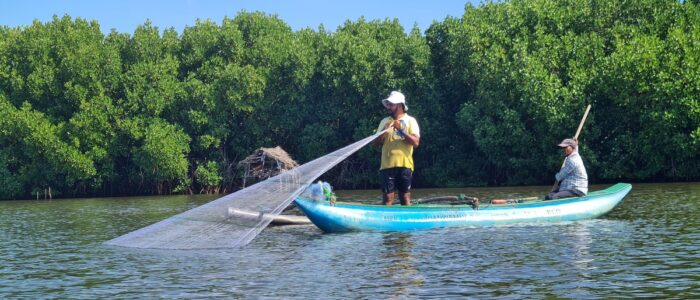
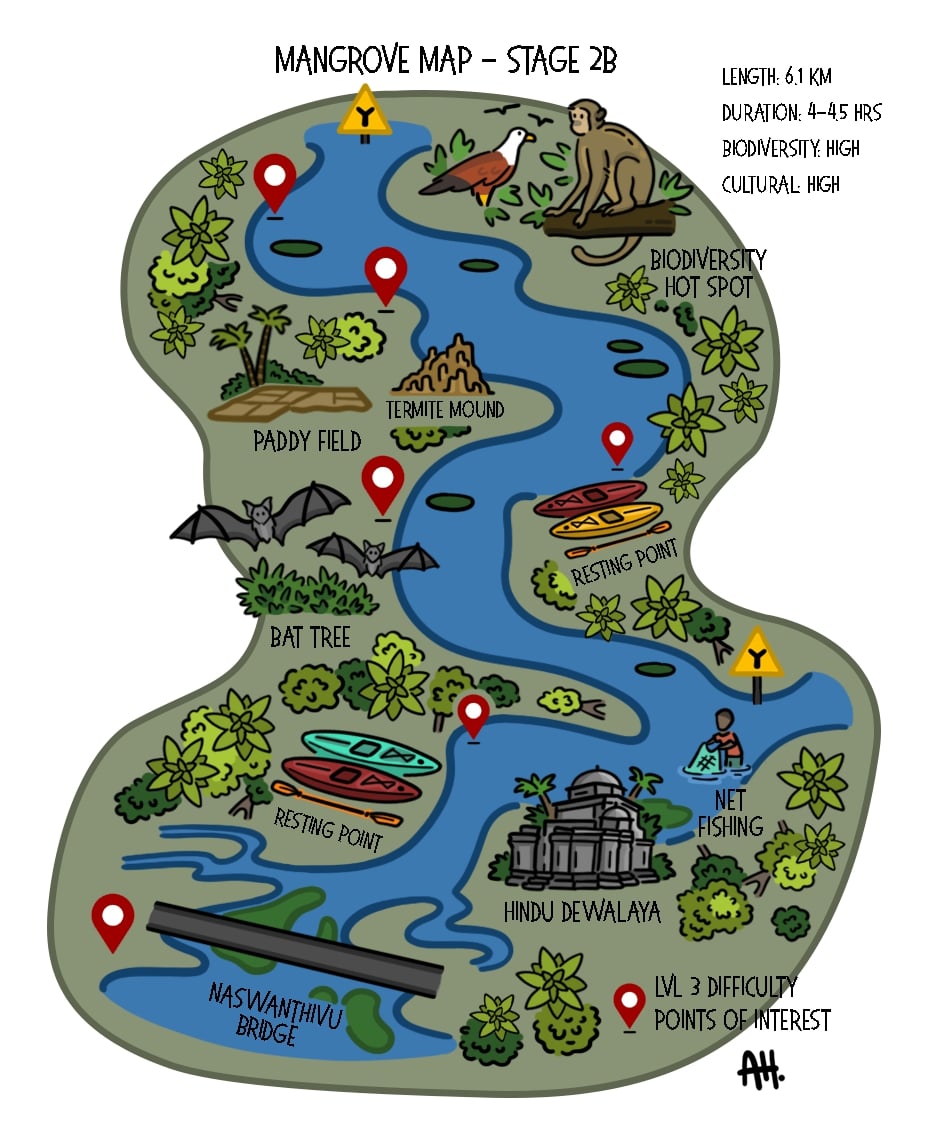
The second stage of the trail begins, running from Vattawan toward the Nasivanthivu Bridge. At the start of the section paddlers can observe a fully functioning V-shaped fish trap used for cast nest fishing and a nearby fish 'Wadiya's (resting hut used by fishermen). The area around the wadiya is rich in wildlife, including egrets, cormorants, Brahminy kites, and even Asian water monitors, creating a very scenic and lively spot.
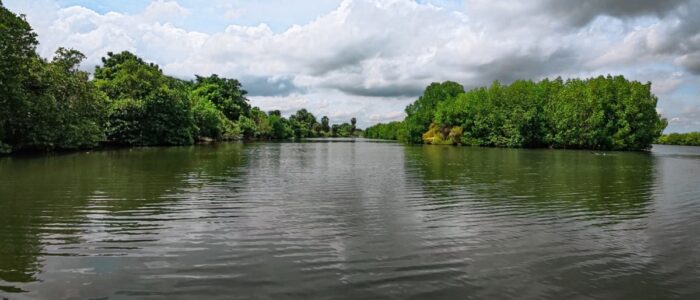
A short distance ahead, visitors may pass the first canoe parking area used by local fishermen, where visitors can rest and have a snack. More similar scenic resting areas appear soon after, and when stepping onto the riverbank here paddlers can also rest with a beautiful view of a vast paddy field. Towards the mid section of the trail the mangroves vegetation begin to mix with coconut trees and other land vegetation. However, the vegetation shifts back to being mangrove-dominated before the river narrows and leads to the “bat tree,” section where thousands of bats hang, creating a dramatic and noisy scene.
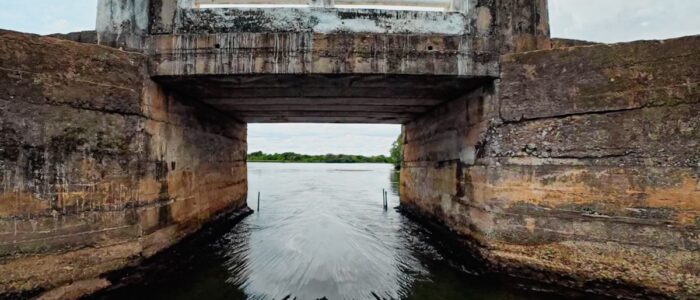
The Y-junction that visitors encounter while moving along the trail, contains several small river islets associated with heavy canoe fishing activity. Visitors will also pass a small Hindu temple on rocky outcrops surrounded by mangroves, and a small island perfect for resting if needed. The trail ends at a narrow section under the Nasivanthivu Bridge. In order to reach this narrow bridge, visitors should follow the correct channel among three available.